
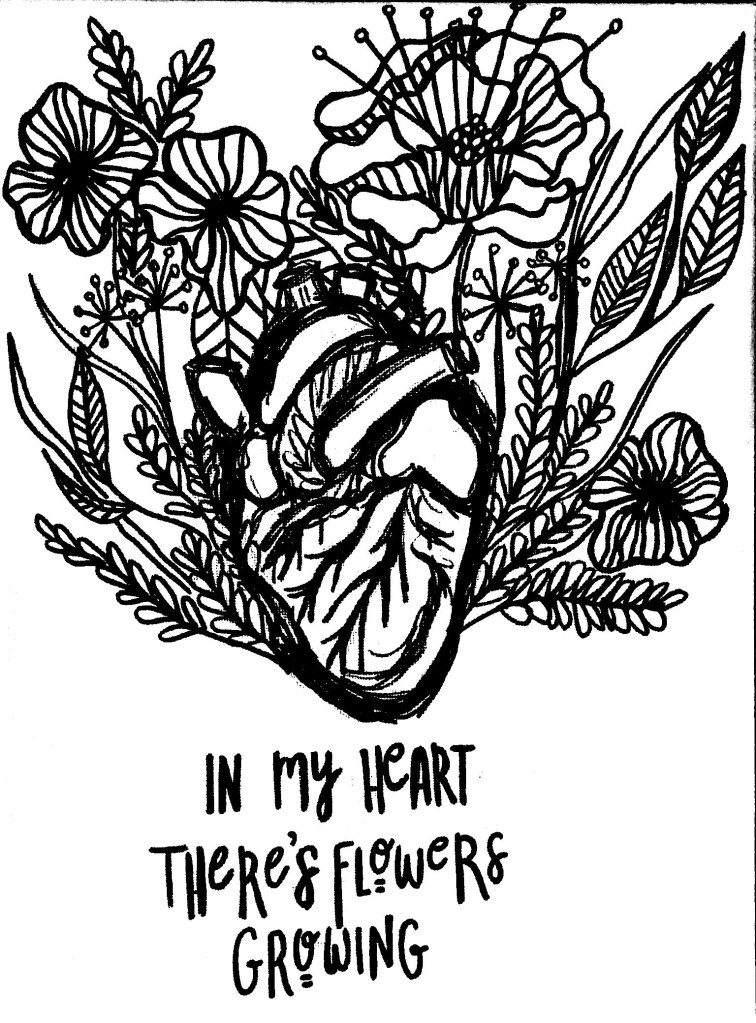
A Novella/Exhortation on things like Selenicereus Grandiflorus & the French Augmented 6th Chord
This phrase, “I will not be a part of that,” I think runs deeper than we imagine, abstract as it may be. As a participant in the social contract with the American state I find in nearly all facets of my day to day existence there are signs and symbols pointing to a sort of, freedom to will. I receive from this land a freedom to live, or be, the ways in which I see fit for myself. And, interestingly, conservative or liberal, religious or atheist, this sentiment is shared: perhaps in my economic freedoms to spend and give what I will, or in my existential freedoms to share and do with my body what I will; perhaps in my religious freedoms to express my faith as I will, or my freedom in autonomy to reject the gods that I will. Perhaps when it gets down to the ethics of this contract we are all directed by the same four way stops. In these ethics, the freedom to will, I do not possess the freedom to not be free. Rather, in accordance with the guiding systems of American life—congress, Wall Street, consumerism, war—I am free; to not participate in these systems is to not be free, and I cannot will that. Left and right, atheist and religious, I often hear a similar phrase: “If it’s meant to be, it will be;” and if it is the freedom to will, it will not be meant to be; it will be Free Will, not Fate. What a love affair! I am free to become that which I can will to consume, a sort of terrifying engorgement of fatalism and contractual consent. I do not wish to consent! But Free Will and Fate have had a love affair behind closed doors, creating a sort of Destiny within which we partake. And as the two will not to be a part of the other, an unsurfaced Nihilism (above mentioned) begins to brood within our hearts, an apathy for the freedom that was simply never there, a distancing and isolating abstraction from Nature, the Earth, and all of its inhabitants, and a hatred for the Other that wills to impede upon our willfullness. An absence of truth aside from our own—terrifyingly, absorbed into the ethic of contractual consent, that of the American ethos. From here we are faced with, perhaps, two options: Fascism, a relinquishing to this larger-than-life lover; or, Anarchy, a vast ocean of otherness painted in ripples of increasing will to simply not be a part of anything. Hatred of the Other is reduced to Otherness as Being, and being as a simple rejection of itself: something awful, like dropping the Atomic Bomb on Hiroshima and Nagasaki in 1945 and incinerating over 100,000 human beings in less than an instant. An immanent decision equivocal to, frankly, nothingness. And if we are to draw anything from the terrible and paradoxical unveiling of this sublime ethos, it is not the assertion or rejection of the Will, but in confession of this statement: I am a part of that…
 THE RESPONSORIAL OUT NOW